OUR SERVICES
Tyre Assessment & Repair
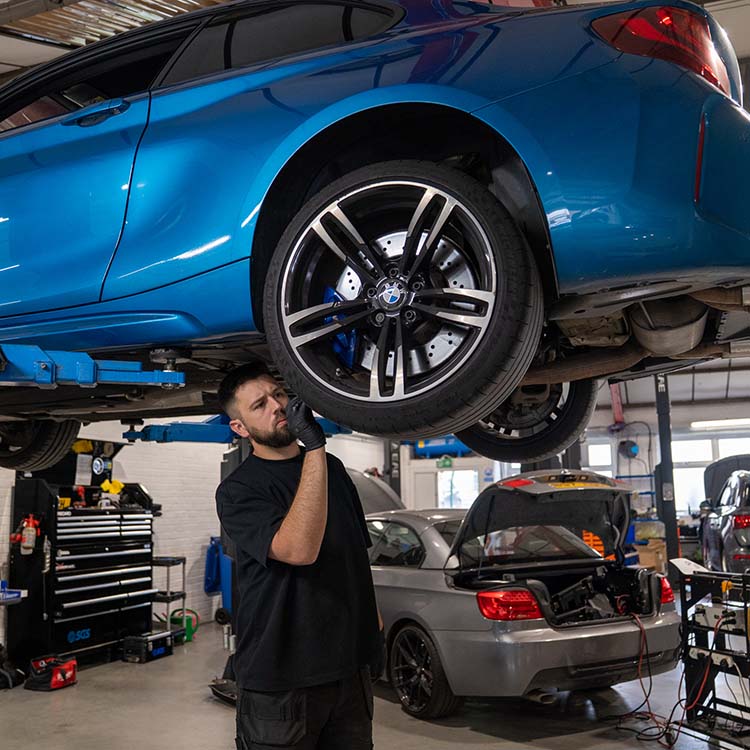
Our technicians can assess tyre condition, tread depth, wear patterns and damage, and advise when replacement is required. For convenience, tyre replacement is arranged through our trusted local tyre partner rather than carried out in-house. We can also carry out locking wheel nut extraction in-house where required.
Tyre Assessment & Repair in Worcester
The tyres are the only thing that connects your vehicle directly to the road, so it’s vital that they’re kept in good condition and have sufficient tread depth. We can assess your tyres and advise if they need repair or replacement so the vehicle is safe to drive.
Recharged Automotive
Get A Free Quote
Speak to our team about any issues, servicing, diagnostics or repair work for your vehicle. Reliable workmanship and honest advice from experienced technicians.
- 01905 458156
- hello@rechargedautomotive.com
- Mon-Fri 8am-5pm
- Unit 10, Checketts Lane Industrial Estate, Checketts Lane, Worcester, WR3 7JW
Tyre repairs in Worcester
Our Tyre Services Include:
- Tyre condition, tread depth, age and wear assessment
- Puncture and slow pressure loss assessment
- Tyre replacement and puncture repair arranged externally through our trusted local tyre partner
- TPMS tyre pressure monitoring system diagnosis and resets
- Uneven tyre wear and wheel alignment checks
- Locking wheel nut extraction and replacement
Common wheel & tyre problems we fix
Tyre fitting and puncture repairs are not carried out in-house. Where required alongside other servicing, maintenance or repair work with us, we can arrange these externally through our trusted local tyre partner for convenience. We do not offer standalone tyre fitting or puncture repair appointments unless previously agreed.
Worn, damaged or ageing tyres
Punctures and slow tyre pressure loss
Uneven tyre wear and alignment issues
TPMS warning lights and tyre pressure faults
Lost, damaged or seized locking wheel nuts
Tyre services in Worcester
Why are my tyres wearing unevenly?
Uneven tyre wear can be caused by incorrect wheel alignment, worn suspension components, incorrect tyre pressures, damaged wheels or previous impact with potholes and kerbs.
Wear on the inner or outer edges of the tyre can often indicate a geometry or suspension issue rather than a problem with the tyre itself. Before simply replacing the tyres, we can inspect the steering and suspension, and check the vehicle’s alignment to identify why the wear has occurred.
Where required, we use our dedicated alignment ramp and 3D four-wheel alignment system to accurately measure and adjust the vehicle’s suspension geometry. This helps prevent a new set of tyres from developing the same uneven wear pattern.
How It Works
Contact Us
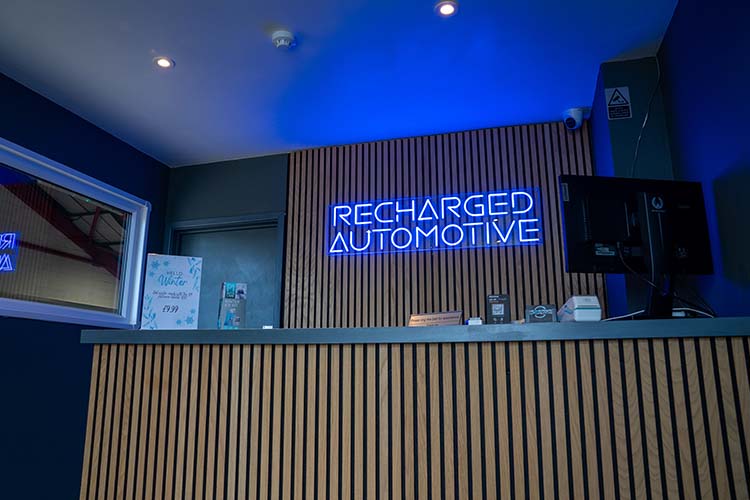
Get in touch with our team to discuss your vehicle, the issues you’re experiencing or any servicing and repair work you may require.
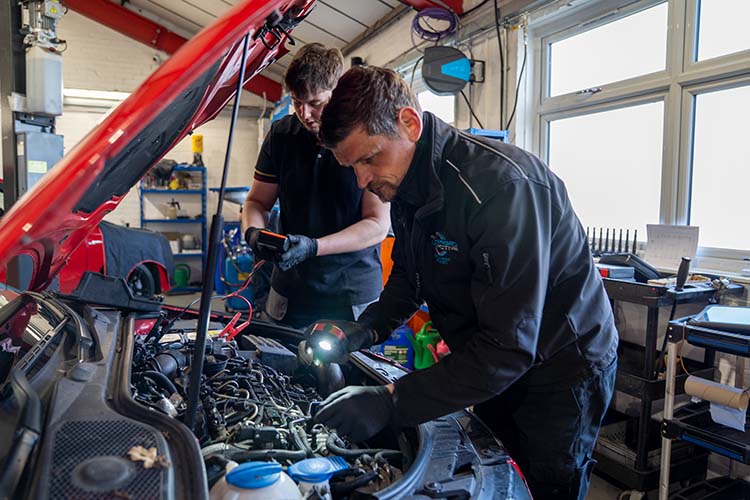
We Get To Work
Our experienced technicians carry out thorough inspections, diagnostics, servicing and repair work using quality parts and trusted workshop equipment.

You're Back On The Road
Once the work is complete, your vehicle is ready to get back on the road performing safely, reliably and at its best.
Why choose Recharged Automotive?

60+ Years Experience
Experienced technicians with German vehicle expertise

German Vehicle Specialists
Audi, BMW, Mercedes-Benz, Volkswagen, Porsche & more

250+ GOOGLE REVIEWS
Customers value our honest advice and quality workmanship.
ADVANCED DIAGNOSTICS
Manufacturer-level equipment for accurate fault finding.
Recharged Automotive Worcester
What our customers are saying
Recharged Automotive
Get A Free Quote
Need help with your vehicle? Contact our team to discuss servicing, diagnostics or repair work with experienced technicians you can rely on.
FAQs | Tyres
Here are the answers to some frequently asked questions about tyre repairs. If you have any issues with your vehicle’s tyres, or need them to be assessed, get in touch with our team today.
Can you fit and repair tyres whilst I wait?
(Unless pre agreed) we do not offer standalone tyre fitting or puncture repair appointments in-house. Where tyres or puncture repairs are required alongside other servicing, maintenance or repair work, we can arrange this through our trusted local tyre partner for convenience.
This allows the tyre work to be completed while your vehicle is already with us, without the need to arrange a separate appointment elsewhere.
What do the numbers and letters on the sidewall of a tyre mean?
The numbers and letters on a tyre’s sidewall indicate the technical specifications such as the size, load index, and speed rating. It’s important to fit a tyre with the correct specifications to ensure legal compliance, safety and optimal driving performance.
The meaning of the numbers and letters are best explained by using an example. The example we will use is 215/40 R18 89Y. Here’s what each number/letter means:
- 215 – the width of the tyre in mm e.g. 215mm
- 40 – the aspect ratio (profile) of the tyre. This is a percentage of the tyre width so in this case it’s 40% of 215mm, so the sidewall height will be 86mm.
- R18 – this refers to the alloy wheel size so in this case it’s 18”.
- 89 – this is the load index of the tyre.
- Y – this is the speed rating of the tyre.
What load index does my tyre need to have?
The load index of the tyre will have 2-3 digits and typically ranges from 70-120. You can find it on the sidewall (next to the tyre size e.g. 205/55 R16), or by checking the vehicle handbook. It’s a good idea to check the vehicle handbook as it’s a possibility that non-standard tyres may have been fitted to the vehicle if it was purchased second-hand. Get in touch if you need help.
This number refers to the maximum weight that a single tyre can support in kilograms. It’s very important to have the correct load index for your vehicle as otherwise it can lead to increased wear, high risk of blowouts, and will result in an MOT fail.
What speed rating does my tyre need to have?
This can be checked on the sidewall of the current tyre, and in the vehicle’s handbook. It’s a good idea to check the handbook as it’s a possibility that non-standard tyres may have been fitted to the vehicle if it was purchased second-hand. The speed rating is denoted as a letter and typically ranges from S-Y on road-legal cars. It will be next to the load rating on the sidewall. It’s very important to fit tyres with the correct speed rating, as otherwise it will not be safe to drive on and will fail an MOT.
What are the minimum tread requirements? And how do I measure this?
The UK’s minimum legal requirement for tyre tread is 1.6mm across the central ¾ of the tyre, and around the entire circumference. While a gauge can measure this, the easiest method is to use a 20p coin. Place the 20p coin into the part of the tyre with the least tread. If you can see the coin’s outer rim, then the tyres have less than 1.6mm tread depth and should be replaced immediately. Having too little tread is a huge safety issue and will result in an MOT failure.
Whilst 1.6mm is the legal limit in the UK, it’s strongly advised that the tyres are replaced when the tread depth reaches 3mm, as below this there is a significant reduction in braking performance and safety.
What should I do if I can't find my locking wheel nut?
If your locking wheel nut key is missing, we recommend trying to locate or source the correct replacement key first, particularly if the locking wheel nut type or key number is known.
Check the glovebox, vehicle tool kit, spare wheel area and underneath the boot floor. On some Audi models, the locking wheel nut key can be hidden surprisingly far forward underneath the boot floor, close to the rear seats.
If the correct key cannot be located or sourced, we can extract the locking wheel nuts in-house using specialist removal equipment and replace them where required.
Whenever we use your locking wheel nut key, we place it on the passenger seat when the vehicle is returned to you, rather than hiding it back in the vehicle. This allows you to return it to your preferred safe location and know exactly where it is for next time.
How do I check my tyre pressure?
- Firstly, check your vehicle’s recommended tyre pressure –this can be found inside the driver’s door or your vehicle’s fuel cap.
- Remove your wheel’s dust caps. Place a pressure gauge on the valve; this gives you the pressure reading.
- Compare your tyre’s reading with the recommended pressure levels. If you need to inflate your tyres, adjust the pressure on the air compressor and begin inflating your tyres.
Should I buy budget or premium tyres?
For most vehicles, particularly premium, performance and high-powered cars, we recommend a reputable premium or quality mid-range tyre rather than choosing purely on the initial purchase price.
Premium tyres generally perform better in areas such as wet braking, handling and longevity. Independent tyre testing has also shown that some cheaper tyres wear considerably faster, meaning the lowest purchase price can sometimes become a false economy once tyre life and replacement frequency are considered.
Not all budget tyres are poor and not every premium tyre is automatically the best choice, so we prefer to consider the individual tyre, vehicle and how it is used. On performance vehicles such as BMW M, Mercedes-AMG, Audi S/RS, Volkswagen R, Porsche and Tesla, tyre quality is particularly important because the tyre forms a critical part of the vehicle’s braking, handling and stability performance.
Where applicable, we also recommend using the correct manufacturer-approved tyre specification, such as BMW star-marked, Mercedes-Benz MO, Audi AO or Porsche N-rated tyres.
Do quattro, xDrive and 4MATIC vehicles need matching tyres and tread depths?
Yes. All-wheel-drive systems are sensitive to differences in tyre rolling circumference between individual wheels and between the front and rear axles. Excessive differences can cause the drivetrain to continually compensate, placing additional load on transfer cases, centre differentials and clutch packs.
As a guide:
- BMW xDrive: BMW specifies a maximum tread depth difference of 2 mm across all four wheel positions on xDrive vehicles. Tyre size, manufacturer and tread pattern should also match, except where the vehicle has an approved staggered tyre setup.
- Audi quattro: Audi requires the same tyre and tread pattern on all four wheels. Audi workshop information also specifies no more than 2 mm tread depth difference across tyres on the same axle.
- Mercedes-Benz 4MATIC: Mercedes requires correctly matched tyres and approved sizes, but there is not one universal published tread-depth tolerance that applies to every 4MATIC system. We therefore check the specification for the individual vehicle rather than quoting a blanket figure.
As a workshop rule, we become cautious once there is around 2 mm or more difference in tread depth between tyres or between the front and rear axles on an AWD vehicle. On some vehicles that can mean replacing two or occasionally all four tyres rather than fitting one new tyre alongside substantially worn tyres.
For example, fitting a new tyre with 7 mm of tread alongside tyres with only 3 to 4 mm remaining creates a significant difference in rolling circumference, even though all four tyres have the same size written on the sidewall.
Staggered setups with different front and rear tyre sizes are perfectly normal where specified by the manufacturer. What matters is that the approved sizes maintain the correct front-to-rear rolling circumference relationship.
How old is too old for a tyre?
Tyre condition is more important than age alone, but rubber deteriorates over time even when plenty of tread remains. The tyre manufacture date is shown in the DOT code on the sidewall. The final four digits indicate the week and year of manufacture, for example 2423 means the tyre was made in week 24 of 2023.
As a general guide, tyres should be inspected particularly carefully once they are around five years old, with many tyre manufacturers recommending replacement by around ten years regardless of remaining tread.
This is especially important on low-mileage vehicles, caravans, trailers and vehicles that are used infrequently. The tread may still look good because the tyre has covered very few miles, but the rubber can still harden, crack and deteriorate with age.
Cracking, deformation, sidewall damage or other signs of deterioration may mean replacement is required much sooner.
Do I need four-wheel alignment after fitting new tyres?
Not automatically, but we would usually recommend a wheel alignment when new tyres are fitted, particularly on high-performance or premium vehicles where replacement tyres can be expensive.
Correct four-wheel alignment helps maximise tyre life and ensures the tyres contact the road correctly. It is especially important if the previous tyres wore unevenly, the vehicle pulls to one side, the steering wheel is off-centre or suspension work has recently been carried out.
As a general rule, we recommend having the wheel alignment checked around every 12 months. Catching small geometry changes early can help prevent premature or uneven tyre wear and protect the investment you’ve just made in a new set of tyres.
Why is my steering wheel vibrating after changing tyres?
A vibration after fitting tyres is commonly caused by incorrect wheel balancing, but it can also be caused by a damaged wheel, defective tyre, incorrect fitment or an existing suspension or wheel bearing problem.
If the vibration started immediately after tyre replacement, wheel balance and tyre fitment would normally be the first things to check.
Let's get you back on the road.
German car specialists delivering expert servicing, diagnostics and repairs to keep your vehicle performing at its best and get you back on the road with confidence.