OUR SERVICES
Hybrid & EV Repairs
Here at Recharged Automotive in Worcester, we provide specialist hybrid and electric vehicle diagnostics, servicing and repairs for German EV, hybrid & Tesla vehicles. As HEVRA members, our trained technicians can service & maintain EV/Hybrids, diagnose high-voltage battery faults, charging problems, electric drive system faults, thermal management and battery cooling issues, as well as electrical, software and control system faults. Where appropriate, we can also assess high-voltage battery problems and advise on battery repair or replacement options.
Hybrid and Electric Vehicle Repairs in Worcester
Our specialist hybrid and electric vehicle technicians are trained to IMI Level 4, enabling us to safely diagnose and repair complex high-voltage EV and hybrid systems. We diagnose charging problems, high-voltage battery faults, thermal management and cooling system issues, electric drive faults, regenerative braking problems and software or control module faults. We can also diagnose charging port and associated component failures, as well as assess degraded or faulty high-voltage batteries and advise on suitable repair or replacement options.
Recharged Automotive
Get A Free Quote
Speak to our team about any issues, servicing, diagnostics or repair work for your vehicle. Reliable workmanship and honest advice from experienced technicians.
- 01905 458156
- hello@rechargedautomotive.com
- Mon-Fri 8am-5pm
- Unit 10, Checketts Lane Industrial Estate, Checketts Lane, Worcester, WR3 7JW
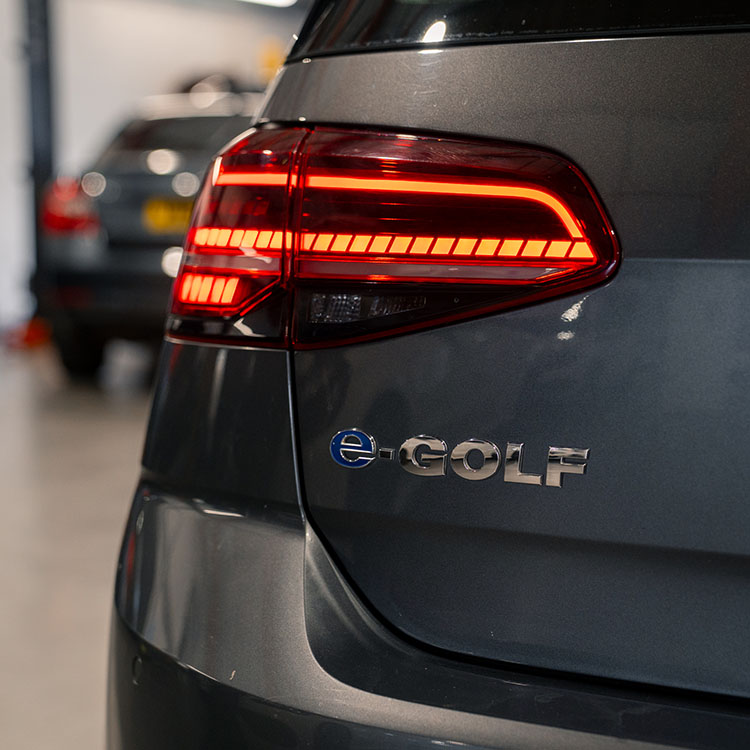
Hybrid & EV Repairs In Worcester
Our Hybrid & EV Services Include:
- Hybrid & Electric Vehicle Routine Servicing
- Hybrid & EV Diagnostics and Technical Assessments
- High-Voltage System Fault Diagnosis
- High-Voltage Battery Diagnostics & Dealth Assessment
- High-Voltage Battery Repair & Replacement Options
- EV Charging System & Charging Port Repairs
- Electric Motor & Drive System Diagnostics
- Battery Cooling & Thermal Management System Repairs
- Regenerative Braking System Diagnostics & Repairs
- High-Voltage Electrical & Control System Repairs
- Software, Programming & Control Module Diagnosis
- Hybrid System Fault Diagnosis & Repairs
Common Hybrid & EV Problems We Fix
Battery degradation & damage
Charging system faults
Cooling system faults
Software faults
Regenerative braking system damage
Electric motor & powertrain issues
Hybrid & EV Repairs In Worcester
Can all garages work on hybrid and electric vehicles?
Not all garages are capable of working on hybrid and electric vehicles as they require specialised training. Here at Recharged Automotive in Worcester, we are able to perform repairs and servicing on all cars including hybrid and electric vehicles from different manufacturers.
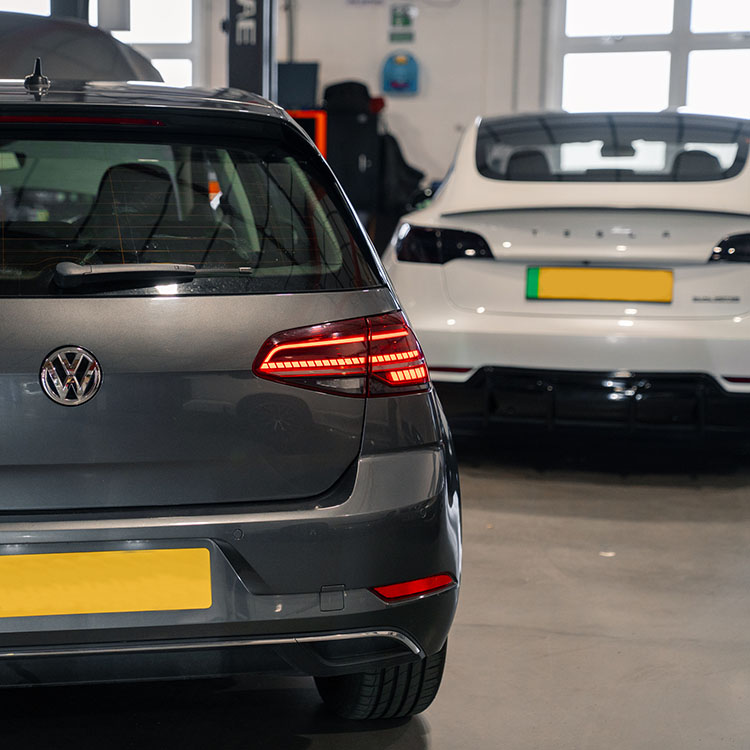
How It Works
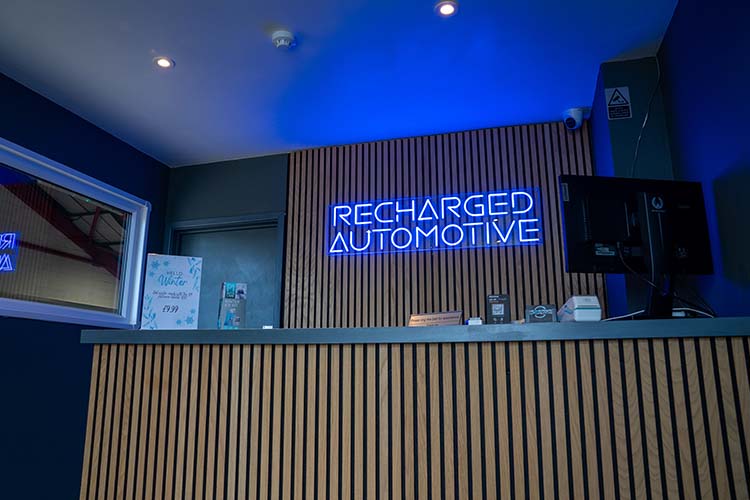
Contact Us
Get in touch with our team to discuss your vehicle, the issues you’re experiencing or any servicing and repair work you may require.
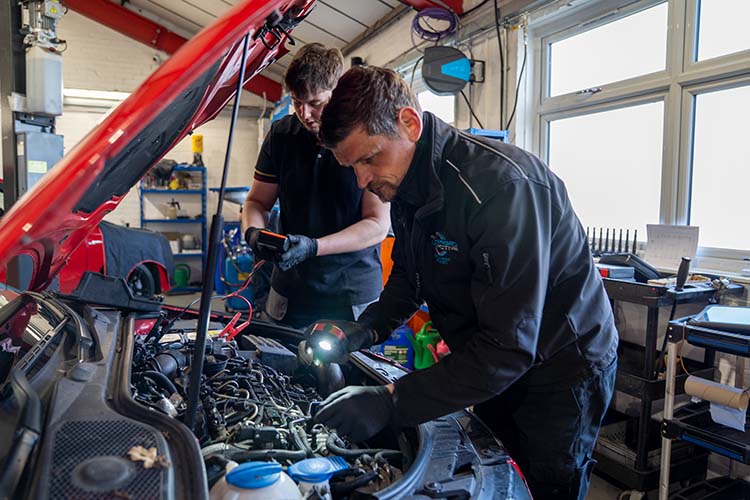
We Get To Work
Our experienced technicians carry out thorough inspections, diagnostics, servicing and repair work using quality parts and trusted workshop equipment.
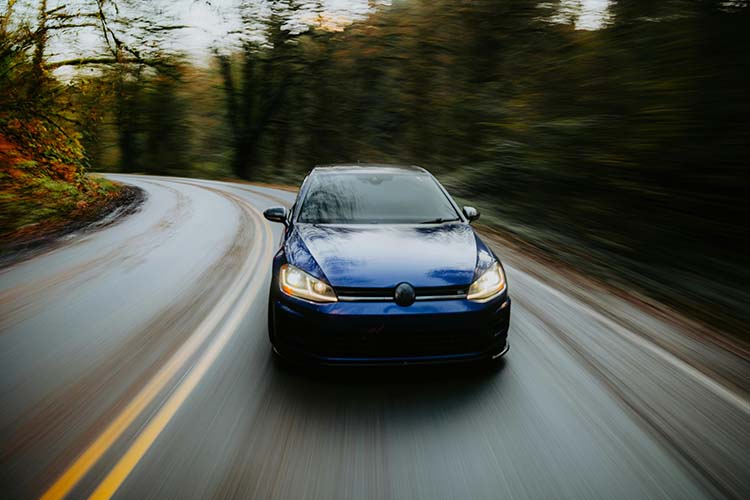
You're Back On The Road
Once the work is complete, your vehicle is ready to get back on the road performing safely, reliably and at its best.
Why choose Recharged Automotive?

60+ Years Experience
Experienced technicians with German vehicle expertise

German Vehicle Specialists
Audi, BMW, Mercedes-Benz, Volkswagen, Porsche & more

250+ GOOGLE REVIEWS
Customers value our honest advice and quality workmanship.

ADVANCED DIAGNOSTICS
Manufacturer-level equipment for accurate fault finding.
Recharged Automotive Worcester
What our customers are saying
Recharged Automotive
Get A Free Quote
Need help with your vehicle? Contact our team to discuss servicing, diagnostics or repair work with experienced technicians you can rely on.
FAQs | Hybrid & EV Repairs
Here you’ll find answers to some of the most commonly asked questions about hybrid and electric vehicles, and the common repairs needed. If you notice any problems with your car, get in touch with our team today who can diagnose and fix the issue.
What are the different types of hybrid vehicles?
There are three main types of hybrid cars: mild hybrid (MHEV), full hybrid (HEV), and plug-in hybrid (PHEV). Here’s a summary of each of the types:
- Mild hybrid (MHEV): these use an electric motor to assist a petrol engine, but are unable to drive using electric power alone. The electric system is designed to improve fuel economy and performance.
- Full hybrid (HEV): these can be driven using either the petrol engine, electric motor, or both in combination. They automatically switch between the power sources depending on the journey in order to improve fuel efficiency.
- Plug-in hybrid (PHEV): these use a larger battery which needs to be charged using an external power source (by plugging in to the mains). They can drive for longer distances using only electricity compared to HEVs.
Mild-Hybrid (MHEV) | Full Hybrid (HEV) | Plug-In Hybrid (PHEV) |
Plug-in charging is not required | Plug-in charging is not required | Plug-in charge is required |
Cannot run on electricity alone, and just use it to aid the petrol engine | Can run using electricity, petrol or both together | Can run using electricity, petrol or both together |
Use a small electric motor | Use a moderate electric motor | Use the largest electric motor |
Cannot run using only electricity | Can run using only electricity but the range is limited | Can run for longer using on electricity |
Charges using regenerative braking and the petrol engine | Charges using regenerative braking and the petrol engine | Charges using the mains (plugging-in) and via regenerative braking/ petrol engine |
Do hybrid cars self-charge?
Hybrid cars can self-charge by using regenerative braking. Regenerative braking happens when you lift your foot off the accelerator, which causes the electric motor to act as a generator by converting the kinetic energy into electrical energy. This energy is then stored in the battery. The combustion engine also helps to recharge it, by using a generator which sends electricity to the battery when it needs to be recharged. This mainly happens whilst cruising at steady speeds, for example whilst on a motorway.
Can you service, diagnose & repair Tesla vehicles?
Yes. We have recently invested in Tesla Toolbox, Tesla’s official diagnostic and service software, allowing us to expand our specialist Tesla diagnostics and repair capabilities alongside the German vehicle brands we specialise in.
Our IMI Level 4 trained EV specialists can diagnose and repair Tesla high-voltage systems, charging faults, thermal management and cooling systems, electrical and electronic faults, as well as carry out routine servicing, brakes, suspension and mechanical repairs.
Our continued investment in Tesla diagnostic equipment, technical information and training allows us to provide increasingly comprehensive independent Tesla servicing, diagnostics and repairs from our Worcester workshop.
What are the most common issues with hybrid vehicles?
Hybrid vehicles combine a conventional engine with high-voltage electrical systems, meaning faults can occur within either system or where the two work together. Common hybrid vehicle problems include…
- High-voltage hybrid battery deterioration or individual cell/module faults
- Hybrid battery cooling and thermal management faults
- High-voltage isolation faults
- Inverter and power electronics faults
- Electric drive motor faults
- On-board charger and charging faults on plug-in hybrids (PHEVs)
- DC/DC converter faults
- Regenerative braking system faults
- High-voltage contactor and electrical connection faults
- Hybrid system warning lights and software or control module faults
Correct diagnosis is particularly important with hybrid vehicles, as a hybrid system warning does not automatically mean the high-voltage battery needs replacing. Our IMI Level 4 trained hybrid and EV specialists can test the complete system to identify the root cause before recommending repairs.
What are the most common issues with electric cars?
Electric vehicles have fewer conventional engine components, but their high-voltage and electronic systems can still develop complex faults. Common EV problems include…
- High-voltage battery degradation, cell imbalance and battery faults
- High-voltage isolation and insulation faults
- EV charging faults and charging port problems
- On-board charger (OBC) faults
- DC/DC converter faults
- Inverter and power electronics faults
- PTC heater and cabin heating faults
- Electric drive motor faults
- Battery cooling and thermal management problems
- 12V battery and low-voltage electrical faults
- Software, control module and communication faults
An EV warning light does not necessarily mean the high-voltage battery has failed. Correct diagnosis using manufacturer-level equipment and high-voltage testing is essential to identify the actual cause before replacing expensive components.
What are the most common hybrid & electric vehicle fault codes?
Hybrid and EV fault codes can relate to the high-voltage battery, charging system, inverter, DC/DC converter, PTC heater, electric drive motor, thermal management or high-voltage insulation system. Common examples include…
P0AA6 / P0AA600 – High-voltage isolation / insulation fault
P0A80 – Hybrid or EV high-voltage battery performance fault
P0A7D – High-voltage battery state of charge too low
P0A90 – Electric drive motor performance fault
P0A95 – High-voltage fuse fault
P0A9C / P0A9D / P0A9E – High-voltage battery temperature sensor faults
P0A1F – Battery energy control module fault
P0D26 – Battery charger system performance fault
P0D27 – Battery charger input voltage too low
P0D28 – Battery charger input voltage too high
Mercedes-Benz P2C85 / P2C87 / P2C88 – High-voltage insulation faults, which can include faults associated with the PTC heater
BMW 22223F – DC/DC converter / 12V power supply fault
We diagnose hybrid and EV faults across Tesla, Volkswagen, Audi, SEAT, CUPRA, Škoda, Mercedes-Benz, BMW, MINI and Porsche vehicles. This includes Mercedes-Benz PTC heater and insulation faults, BMW i3 and MINI electric DC/DC converter problems, Audi e-tron and Volkswagen ID charging and high-voltage faults, Porsche Taycan charging and electrical faults, plug-in hybrid system faults across SEAT, CUPRA and Škoda models, and Tesla battery, charging, drive unit and thermal management faults.
Tesla vehicles also use manufacturer-specific diagnostic alerts rather than relying solely on conventional P-codes. We use Tesla Toolbox alongside ODIS for Volkswagen Group vehicles, BMW ISTA and Mercedes-Benz XENTRY to access manufacturer-level diagnostic information.
A stored fault code or diagnostic alert is only the starting point. Correct testing is required to identify the root cause of the high-voltage or electrical fault before recommending repairs.
What electric & hybrid vehicles do you work on?
We specialise in EV and hybrid diagnostics, high-voltage systems and repairs for Tesla and the German vehicle brands we support, including…
Tesla – Model 3, Model Y, Model S and Model X
Volkswagen – e-Golf, e-up!, ID.3, ID.4, ID.5, ID.7 and ID. Buzz
Audi – e-tron, Q4 e-tron, Q6 e-tron, e-tron GT and A6 e-tron
BMW – i3, i3 REx, i4, i5, i7, iX1, iX2, iX3, iX and i8
MINI – MINI Electric, Cooper Electric and Aceman
Mercedes-Benz – EQA, EQB, EQC, EQE, EQS, EQV and electric G-Class
smart – smart EQ fortwo, smart EQ forfour, #1, #3 and #5
Porsche – Taycan and Macan Electric
CUPRA – Born and Tavascan
Škoda – Enyaq and Elroq
SEAT – Mii Electric and plug-in hybrid models
We also work on plug-in hybrid (PHEV) models across these manufacturers, including GTE, TFSI e, eHybrid and other manufacturer-specific hybrid systems.
For other makes of electric and hybrid vehicles, we can also carry out routine servicing and mechanical maintenance, including brakes, suspension, tyres and other general maintenance. Specialist high-voltage diagnostics and repairs are focused on Tesla and the German brands we specialise in.
How do I know if my hybrid or EV needs a battery repair?
Signs that your hybrid or electric vehicle needs a battery repair or replacement include:
- Reduced range – if you notice a drop in your range then this is a key sign.
- Warning lights – if you notice a warning light corresponding to a battery-related issue.
- Reduced power – if the vehicle is struggling to accelerate.
- Slow charging – if you notice that your car is taking longer to charge than usual this can be a sign that the battery needs replacing or repairing.
How long do the batteries last in hybrids and EVs?
This can depend on the vehicle and your driving habits. The battery in a hybrid should last between 8-15 years or around 100,000-200,000 miles. The battery in an EV should last 10-20 years or 150,000-250,000 miles.
How do I make the battery last as long as possible in an EV or hybrid?
Modern EV and hybrid batteries are designed to last many years, but good charging and driving habits can help reduce battery degradation:
- Avoid regularly leaving the battery at 0% or 100% charge for long periods
- For everyday EV use, charging to around 80% where practical can help reduce long-term battery degradation
- Use rapid DC charging when needed, but regular slower AC charging is generally preferable for routine charging
- Avoid leaving the vehicle unused for extended periods with a completely full or nearly empty battery
- Keep the vehicle’s battery cooling and thermal management systems correctly maintained
- Address battery, charging or cooling system warning messages promptly
- Follow the manufacturer’s servicing and maintenance requirements
Occasionally charging an EV to 100% is perfectly normal, particularly before a long journey. The aim is simply to avoid keeping the high-voltage battery at extreme states of charge unnecessarily for prolonged periods.
Why is the range dropping on my hybrid/ EV?
If you notice the range dropping on your hybrid/ EV, then this could be an indication of battery wear. Over time, the maximum capacity of the battery will gradually decrease, and hence the range will too. Temperature changes can also affect this too, as colder weather typically results in a lower range. If the range drops suddenly rather than gradually, then this indicates a more significant issue which will require a diagnostic.
How do I book a diagnostic or repair for my hybrid/ EV in Worcester?
Get in touch to book your vehicle in. Our team of highly trained technicians will run various tests to identify the problem, and how to fix it. If you notice any issues with your hybrid or electric vehicle, call us today.
Let's get you back on the road.
German car specialists delivering expert servicing, diagnostics and repairs to keep your vehicle performing at its best and get you back on the road with confidence.