OUR SERVICES
AdBlue Repairs & Diagnostics
We offer a range of AdBlue services in Worcester including fault diagnostics and repairs such as sensor, pump and injector replacements. If you have any issues with your car’s AdBlue system such as a warning light, get in touch with our team today.
AdBlue Services in Worcester
The AdBlue system is crucial to ensure emissions compliance and issues can result in MOT failure or your vehicle’s engine not starting. Common problems include:
– Software Faults
– NOX Sensors
– Other electrical and mechanical parts, such as AdBlue Injector, AdBlue Pumps, and Level Sensors.
We can run diagnostic testing to pinpoint the issues, carry out necessary repairs and perform software updates to ensure that the system functions properly again.
Recharged Automotive
Get A Free Quote
Speak to our team about any issues, servicing, diagnostics or repair work for your vehicle. Reliable workmanship and honest advice from experienced technicians.
- 01905 458156
- hello@rechargedautomotive.com
- Mon-Fri 8am-5pm
- Unit 10, Checketts Lane Industrial Estate, Checketts Lane, Worcester, WR3 7JW
AdBlue Repairs In Worcester
Our AdBlue Services Include:
- AdBlue Fault Diagnostics
- AdBlue Fluid Top-Ups
- Sensor Repairs e.g. NOx Sensors
- Part Replacement e.g. Pumps, Injectors etc.
- Software Updates & Resets
Common AdBlue Faults We Fix Across BMW, Mercedes, Audi & VW Ranges
P20EE – SCR NOx Catalyst Efficiency Below Threshold (Bank 1)
P204F – Reductant (AdBlue) System Performance
P20E8 – Reductant Pressure Too Low
P207F – Reductant Quality Performance
P203B – Reductant Level Sensor Circuit Range/Performance
P2047 – Reductant Injector Circuit/Open
P205B – Reductant Tank Temperature Sensor Range/Performance
P20C1 – Reductant Heater Performance
P229F – NOx Sensor Circuit Range/Performance (Downstream Sensor)
P2BAA – NOx Exceeded / SCR System Performance (manufacturer-specific, very common on Mercedes and VAG vehicles)
AdBlue Diagnostics & Repair In Worcester
How do you diagnose an AdBlue fault?
Usually, an AdBlue fault is indicated by a warning light on the dashboard or potentially you filled up your AdBlue system and the level hasn’t changed. If left unresolved, a countdown (in miles) can appear which, once reached, will prevent the engine from starting due to EU emissions system regulations.
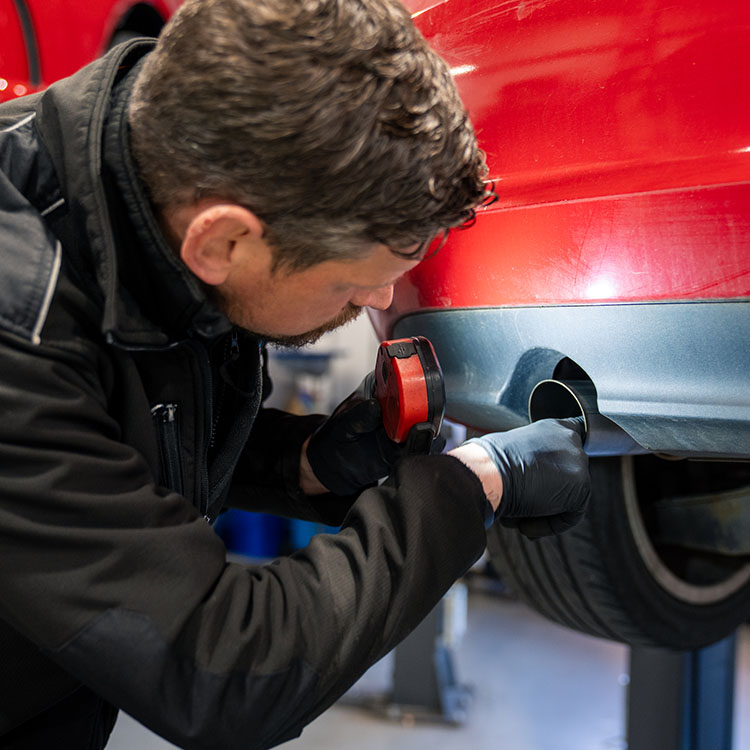
If you do get a fault with your AdBlue system, we will carry out an AdBlue assessment. Testing varies depending on the fault, but tests include checking:
– AdBlue Fluid Level
– Fluid for Contamination
– AdBlue Leaks
– Connecting the relevant scan tool to scan your vehicle’s engine control unit or Adblue control unit
We have genuine manufacturer tools in-house for Mercedes, BMW, VW & Audi to scan for any potential faults in the system. Once the fault has been established, we will carry out specific test plans to accurately diagnose the AdBlue system. Some of these tests may include:
– Adblue Pump/System Pressure Testing
– NOx Sensor Testing
– Adblue Injector Metering Valve Testing
– Software Checks/Updates
– AdBlue Tank Level Sensor Testing
– AdBlue Heater Line Testing
– AdBlue Catalyst Testing Inspection
Once the test plan and diagnosis have been completed, we will accurately be able to tell you the fault with your vehicle and propose a repair method to repair the fault.
How It Works
Contact Us
Get in touch with our team to discuss your vehicle, the issues you’re experiencing or any servicing and repair work you may require.
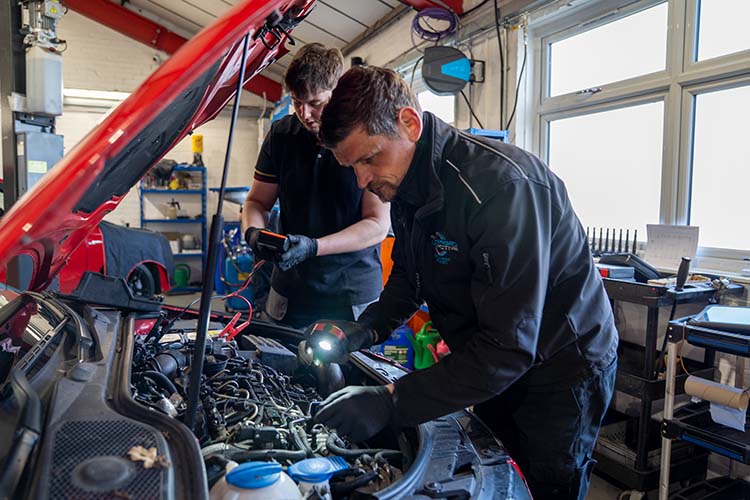
We Get To Work
Our experienced technicians carry out thorough inspections, diagnostics, servicing and repair work using quality parts and trusted workshop equipment.

You're Back On The Road
Once the work is complete, your vehicle is ready to get back on the road performing safely, reliably and at its best.
Why choose Recharged Automotive?

60+ Years Experience
Experienced technicians with German vehicle expertise

German Vehicle Specialists
Audi, BMW, Mercedes-Benz, Volkswagen, Porsche & more

250+ GOOGLE REVIEWS
Customers value our honest advice and quality workmanship.

ADVANCED DIAGNOSTICS
Manufacturer-level equipment for accurate fault finding.
Recharged Automotive Worcester
What our customers are saying
Recharged Automotive
Get A Free Quote
Need help with your vehicle? Contact our team to discuss servicing, diagnostics or repair work with experienced technicians you can rely on.
FAQs | AdBlue Services
Below you’ll find the answers to some of the most frequently asked questions about AdBlue, common faults, diagnostics, and repairs. If you notice any issues such as an AdBlue warning light on your vehicle’s dashboard, get in touch with our team who can diagnose and fix the problem.
What is AdBlue?
AdBlue is a fluid used in diesel vehicles to reduce nitrogen oxide (NOx) emissions. It is mandatory for vehicles registered after September 2015 and is required to meet the strict Euro 6 emission regulations.
Nitrogen oxide is a harmful gas, so reducing the emissions is important from an environmental and safety standpoint. AdBlue is made from urea and deionised water, with a concentration of 32.5% urea. It is injected into the exhaust system in diesel vehicles and breaks down the harmful nitrogen oxide into nitrogen, and water, with a small amount of carbon dioxide as a by-product. It reduces nitrogen oxide emissions by over 90%.
What common AdBlue/SCR fault codes we can fix?
P20E8 – Reductant Pressure Too Low.
P20E9 – Reductant Pressure Too High.
P20E7 – Reductant Pressure Control Performance.
P2047 – Reductant Injector Circuit/Open (Bank 1 Unit 1).
P2048 – Reductant Injector Circuit Low.
P2049 – Reductant Injector Circuit High.
P205B – Reductant Tank Temperature Sensor Circuit Range/Performance.
P205C – Reductant Tank Temperature Sensor Circuit Low.
P205D – Reductant Tank Temperature Sensor Circuit High.
P205E – Reductant Tank Temperature Sensor Circuit Intermittent.
P203B – Reductant Level Sensor Circuit Range/Performance.
P203C – Reductant Level Sensor Circuit Low.
P203D – Reductant Level Sensor Circuit High.
P203E – Reductant Level Sensor Circuit Intermittent.
P20A0 – Reductant Purge Control Valve Circuit/Open.
P20A1 – Reductant Purge Control Valve Performance.
P20A2 – Reductant Purge Control Valve Circuit Low.
P20A3 – Reductant Purge Control Valve Circuit High.
P20A4 – Reductant Purge Control Valve Stuck Open.
P20A5 – Reductant Purge Control Valve Stuck Closed.
P20B9 – Reductant Heater ‘A’ Control Circuit/Open.
P20BA – Reductant Heater ‘A’ Performance.
P20BB – Reductant Heater ‘A’ Circuit Low.
P20BC – Reductant Heater ‘A’ Circuit High.
P20BD – Reductant Heater ‘B’ Control Circuit/Open.
P20BE – Reductant Heater ‘B’ Performance.
P20BF – Reductant Heater ‘B’ Circuit Low.
P20C0 – Reductant Heater ‘B’ Circuit High.
P20EE – SCR NOx Catalyst Efficiency Below Threshold (Bank 1).
P2200 – NOx Sensor Circuit (Bank 1).
P2201 – NOx Sensor Circuit Range/Performance.
P2202 – NOx Sensor Circuit Low.
P2203 – NOx Sensor Circuit High.
P2204 – NOx Sensor Circuit Intermittent.
P2205 – NOx Sensor Heater Control Circuit.
P2206 – NOx Sensor Heater Control Circuit Low.
P2207 – NOx Sensor Heater Control Circuit High.
P229F – NOx Sensor Circuit Performance (Bank 1 Sensor 2).
P220F – NOx Sensor Supply Voltage Circuit Low.
P2210 – NOx Sensor Supply Voltage Circuit High.
P2BA6 – NOx Exceedance – SCR System Performance.
P207F – Reductant Quality Performance.
P208A – Reductant Pump Control Circuit/Open.
P208B – Reductant Pump Control Circuit Range/Performance.
P208C – Reductant Pump Control Circuit Low.
P208D – Reductant Pump Control Circuit High.
P208E – Reductant Pump Control Circuit Intermittent.
P20E0 – Reductant Pressure Sensor Circuit.
P20E1 – Reductant Pressure Sensor Range/Performance.
P20E2 – Reductant Pressure Sensor Circuit Low.
P20E3 – Reductant Pressure Sensor Circuit High.
P20E4 – Reductant Pressure Sensor Intermittent.
P204F – Reductant System Performance.
P206A – Reductant Quality Sensor Circuit.
P206B – Reductant Quality Sensor Range/Performance.
P206C – Reductant Quality Sensor Circuit Low.
P206D – Reductant Quality Sensor Circuit High.
P206E – Reductant Quality Sensor Circuit Intermittent.
What are some of the manufactuer terms for AdBlue systems?
Audi / Volkswagen Group
AdBlue®
SCR System
SCR Catalyst
Reductant System
Urea Injection System
Mercedes-Benz
AdBlue®
BlueTEC (marketing name for Mercedes diesel engines using SCR technology)
SCR System
Reductant System
Emission Control System
BMW
AdBlue®
SCR System
Diesel Exhaust Fluid (occasionally in technical literature)
Reductant System
Can I drive with an AdBlue warning light?
Yes, you can drive with an AdBlue warning light, as long as the engine starts and there are no severe AdBlue external leaks and the engine is not in limp home mode, you should be ok to drive.
The AdBlue/SCR system is purely designed for emission purposes so should not impact engine performance. However, if ignored and the mileage countdown reaches zero the engine will no longer start and will need to be recovered.
Why is AdBlue not required in petrol vehicles?
Petrol engines do not require AdBlue because they produce far lower levels of nitrogen oxide compared to diesel engines. Petrol engines are capable of meeting emissions standards just using the catalytic converter, so there is no need for AdBlue.
How much AdBlue do cars usually use?
Most cars use 1 litre of AdBlue every 500-1,000 miles, and most have a tank capacity of 10-20 litres. It takes most cars around 5,000-10,000 miles to empty the tank, but it may vary depending on your driving style.
Where is the AdBlue tank located?
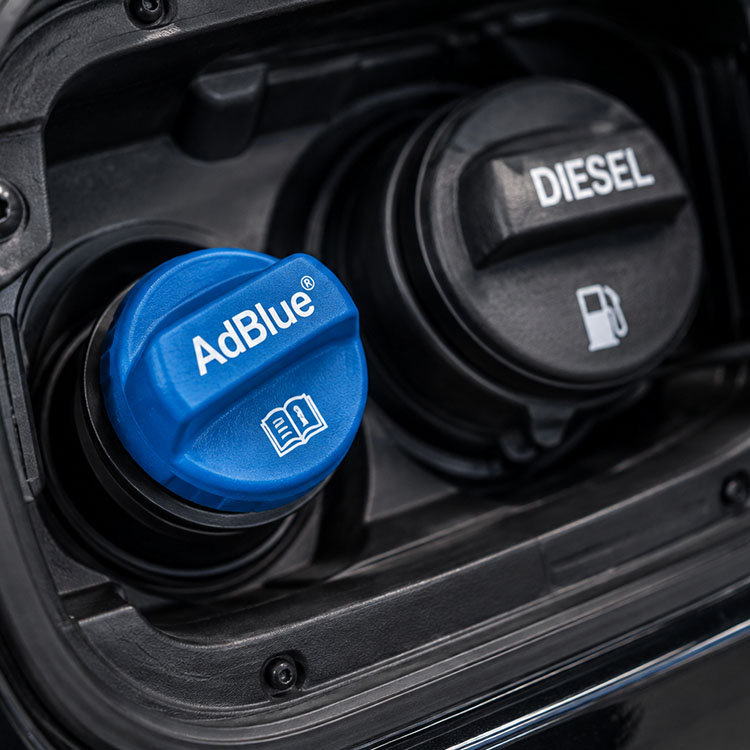
This depends on the make and model of the vehicle. In many cars it is located next to the fuel filler cap, and will be a separate blue cap labelled “AdBlue” or a symbol of a water drop inside a square. In some vehicles it may be located in the boot, engine bay or under the rear seats.
What are the signs that the AdBlue is running low?
Some common signs that your AdBlue needs topping up include:
- AdBlue warning light on the dashboard.
- The countdown has reached zero – most diesel vehicles will show a countdown for when the AdBlue needs topping up.
- Another sign could be reduced engine performance e.g. limp mode.
What are the most common issues with the AdBlue system?
Some of the most common issues with the AdBlue in a vehicle’s exhaust system include:
- Faulty level sensor
- Faulty NOx sensor
- AdBlue fluid contamination
- Injector failure
- Pump failure
- Leaking tank
- Heater malfunction
- Countdown issues
Why does my AdBlue light keep coming on?
If you have topped up your AdBlue and the warning light keeps coming on, then this could indicate another issue with the system that requires attention. Get your vehicle booked in with a mechanic to diagnose and fix the problem.
What happens if the AdBlue runs out?
If the vehicle runs out of AdBlue, then it will not start, or will go into “limp mode” meaning the power and speed will be significantly restricted. Keeping the AdBlue topped up and making sure the tank doesn’t run dry is crucial, otherwise it can lead to more expensive repairs, breakdowns and the need for recovery.
Will an AdBlue warning light result in an MOT failure?
Yes, any warning lights including the AdBlue light on your dashboard will result in an automatic MOT failure as it is classed as major-defect. Since the AdBlue system plays a crucial role in controlling emissions, any issues will also cause it to fail the emissions test part of an MOT, even if the light itself is not illuminated on the dashboard.
How do I prevent AdBlue issues?
The best way to prevent AdBlue issues is to make sure you keep the tank topped up. Letting the tank run lower than ¼ will increase the risk of crystallisation which can lead to sensor problems, and if it runs completely dry then the vehicle will not start. If you get an AdBlue warning light after the fluid has been topped up, make sure to get your vehicle checked by a mechanic as soon as possible as otherwise this can lead to more costly repairs in future.
How do I book an AdBlue repair in Worcester?
Get in touch to book your vehicle in. We can diagnose the AdBlue fault and repair it to get your vehicle back on the road.
Let's get you back on the road.
German car specialists delivering expert servicing, diagnostics and repairs to keep your vehicle performing at its best and get you back on the road with confidence.