
OUR SERVICES
Timing Chain Repairs
If your vehicle has a timing chain fault, we can diagnose and repair the problem using manufacturer procedures and specialist timing equipment. We carry out timing chain diagnosis, replacement and associated repairs across Volkswagen, Audi, SEAT, CUPRA, Škoda, Mercedes-Benz, BMW, MINI and Porsche vehicles. Common symptoms can include timing chain rattles, engine management lights, camshaft and crankshaft correlation faults, poor running and difficult starting.
Timing Chain Repairs in Worcester
Common signs of timing chain wear include rattling from the engine, poor running, misfires, difficult starting, engine management lights and camshaft or crankshaft correlation fault codes. Timing chains can stretch, while guides and tensioners can also wear or fail, potentially allowing the engine timing to move out of position. If ignored, this can lead to serious or catastrophic engine damage. We can carry out timing chain checks and diagnosis first, then repair or replace the timing chain system where required.
Recharged Automotive
Get A Free Quote
Speak to our team about any issues, servicing, diagnostics or repair work for your vehicle. Reliable workmanship and honest advice from experienced technicians.
- 01905 458156
- hello@rechargedautomotive.com
- Mon-Fri 8am-5pm
- Unit 10, Checketts Lane Industrial Estate, Checketts Lane, Worcester, WR3 7JW
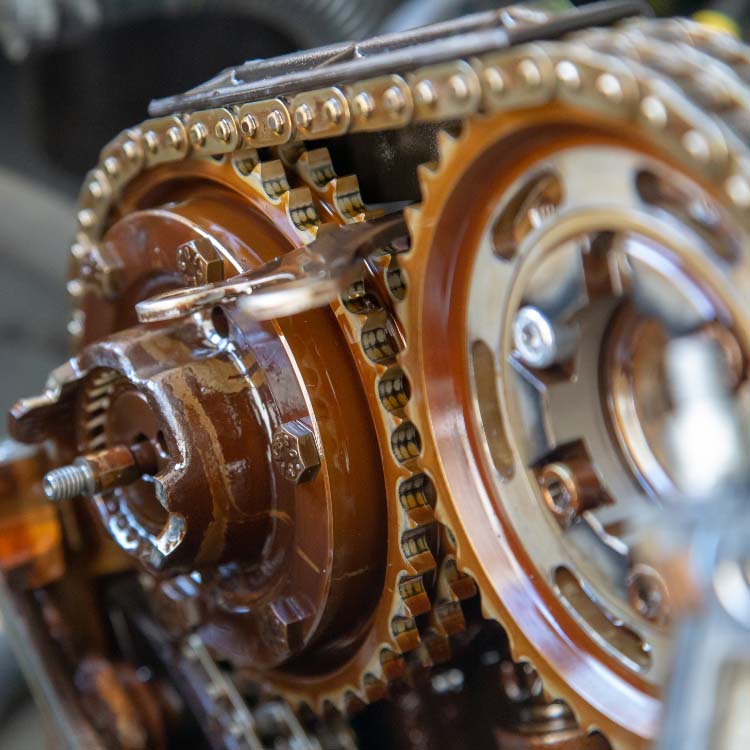
Timing chain replacement in Worcester
Our Timing Chain Services Include:
- Timing chain fault diagnosis and condition checks
- Timing chain, guide and tensioner replacement
- Camshaft and crankshaft correlation testing
- Engine timing checks and re-timing
- Camshaft adjuster, BMW VANOS, Mercedes timing actuator and Porsche VarioCam diagnosis and replacement
- Variable valve timing solenoid and actuator diagnosis
- Timing cover, seal and gasket replacement
Why does the timing chain need replacing?
Timing chains are not usually replaced at a fixed mileage interval. They are designed to last a long time, but the chain, plastic guide rails, hydraulic tensioners and camshaft timing components can all wear with age and mileage.
The plastic timing chain guides can wear and become brittle or break, while wear within the chain itself can increase its effective length. A weakened tensioner can then struggle to control the additional movement, causing timing chain rattle and eventually allowing the engine timing to move out of specification. Poor lubrication, low oil level, incorrect oil specification and extended oil change intervals can accelerate this wear. Camshaft adjusters, sprockets and other timing components can also contribute to timing faults.
A notable exception to the usual “lifetime chain” expectation is the BMW N47 and related N57 diesel engine families. These engines have known timing chain system weaknesses, and in our experience some require timing chain and guide replacement before or around 100,000 miles. The N47 in particular received revised chains, guides and tensioner components during its production life.
If timing chain wear is ignored, the chain can jump or fail completely, potentially allowing the pistons and valves to collide and causing catastrophic engine damage. For this reason, we assess the timing system, associated components and available diagnostic data before recommending replacement.
Timing chain repairs in Worcester
What are the signs that the timing chain needs replacing?
Common signs of timing chain wear or a timing system fault can include:
- Rattling or metallic noise on cold start or at idle
- Engine management light or timing-related warning messages
- Camshaft and crankshaft correlation fault codes
- Difficult starting or extended cranking
- Rough running, misfires or poor engine performance
- Loss of power or reduced efficiency
- Excessive timing adaptation values shown in diagnostic data
- Plastic timing guide debris or metallic contamination found during inspection
These symptoms do not automatically mean the timing chain needs replacing. Faults with tensioners, guides, camshaft adjusters, VANOS, VarioCam or other variable valve timing components can produce similar symptoms. This is why it is important to properly assess the timing system before replacement is recommended.
How It Works
Contact Us
Get in touch with our team to discuss your vehicle, the issues you’re experiencing or any servicing and repair work you may require.
We Get To Work
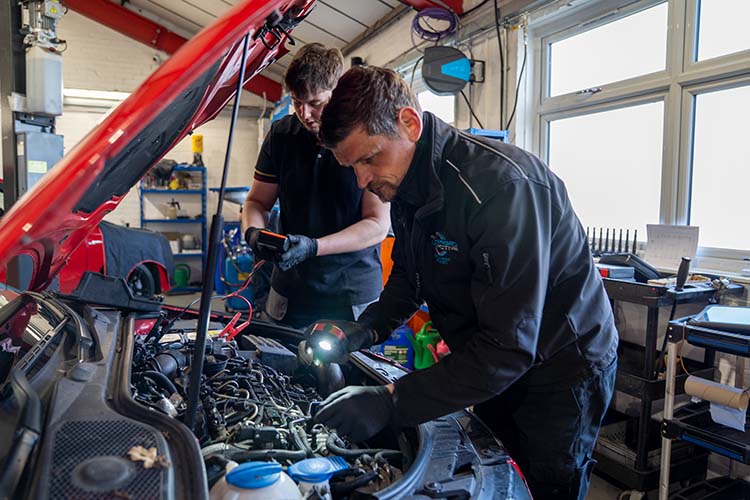
Our experienced technicians carry out thorough inspections, diagnostics, servicing and repair work using quality parts and trusted workshop equipment.

You're Back On The Road
Once the work is complete, your vehicle is ready to get back on the road performing safely, reliably and at its best.
Why choose Recharged Automotive?

60+ Years Experience
Experienced technicians with German vehicle expertise

German Vehicle Specialists
Audi, BMW, Mercedes-Benz, Volkswagen, Porsche & more

250+ GOOGLE REVIEWS
Customers value our honest advice and quality workmanship.

ADVANCED DIAGNOSTICS
Manufacturer-level equipment for accurate fault finding.
Recharged Automotive Worcester
What our customers are saying
Recharged Automotive
Get A Free Quote
Need help with your vehicle? Contact our team to discuss servicing, diagnostics or repair work with experienced technicians you can rely on.
FAQs | Timing Chain Replacement
Below you’ll find answers to the most commonly asked questions about timing chains, and how they can become damaged and in need of replacement or repair. Get in touch today if you need your vehicle’s timing chain to be checked or repaired.
What does a timing chain do?
The timing chain acts as the link between the crankshaft and camshaft, so the engine valves open and close at the right times. The crankshaft controls the pistons moving up and down, and the camshaft controls the intake and exhaust valves opening and closing. The timing chain is responsible for keeping them coordinated. It is made from metal and lubricated by the engine oil.
Is there anything I can do to make the timing chain last longer?
The timing chain is capable of lasting for a very long time (sometimes over 200,000 miles), if the car is well maintained. The main thing that affects it, is the quality of the engine oil. The engine oil should be replaced (along with the oil filter) at least every 10,000 miles or annually. If the oil becomes dirty or runs low, this causes the timing chain to be put under under significantly more strain. Keeping on top of the servicing schedule and checking/ changing the oil regularly is key to making the timing chain last as long as possible.
What is the difference between a timing chain and timing belt?
A timing chain is made from metal, whereas a timing belt is made from rubber. Most vehicles will either have a timing belt or timing chain, as they both perform the same function to link the crankshaft and camshaft to ensure that the engine valves open and close at the right time. Timing chains last longer (sometimes the lifetime of the engine with proper maintenance), but timing belts usually need replacing every 50,000-100,000 miles. Timing belts are cheaper to repair and replace compared to timing chains.
Can a timing chain be repaired or does it need to be replaced?
A worn or stretched timing chain needs to be replaced. As the chain works together with guides, tensioners, sprockets and other timing components, we do not replace the chain in isolation.
On higher-mileage engines, these associated parts may already be worn or damaged, and their condition cannot always be confirmed without dismantling the timing system. Leaving a cracked guide or weak tensioner in place can allow the new chain to jump or fail, risking catastrophic engine damage.
For this reason, we replace the complete timing kit required for that engine so the repair is comprehensive, reliable and can be properly warranted.
What happens if you continue to drive with a damaged timing chain?
Continuing to drive with a damaged timing chain will result in misfiring, rattling noises, and weak acceleration, and it will lead to catastrophic engine damage if the timing chain breaks or jumps. This can cause damage to the valves, pistons and the cylinder head. That’s why it’s very important not to drive with a damaged timing chain, as it can lead to very costly repairs in future.
How long does a timing chain usually last?
There is no universal replacement interval for a timing chain. Some engines will show significant wear at around 100,000 miles, while others can exceed 200,000 miles on the original chain and guides.
We regularly see this variation on Mercedes-Benz M271 and OM651 engines, Volkswagen Group EA888 petrol engines used in models such as the Golf GTI, and BMW N47 and N57 diesel engines. The BMW N47 in particular is well known for timing chain system weaknesses and can require attention earlier than expected.
Service history, oil quality, driving conditions and engine-specific design all influence how quickly the timing system wears. Regular oil changes using the correct specification oil are important because the chain, guides, tensioners and camshaft timing components all rely on good lubrication.
For this reason, we assess timing chain condition based on symptoms, diagnostic data and engine-specific knowledge rather than relying on a fixed mileage figure.
What fault codes can indicate a timing chain or engine timing problem?
Timing chain wear does not always produce a dedicated “timing chain fault” code. More commonly, the engine ECU detects that the camshaft and crankshaft are no longer correctly synchronised or that the variable valve timing system cannot achieve the requested position.
Common examples include:
- P0016 – Crankshaft / Camshaft Position Correlation, Bank 1 Sensor A
- P0017 – Crankshaft / Camshaft Position Correlation, Bank 1 Sensor B
- P0018 – Crankshaft / Camshaft Position Correlation, Bank 2 Sensor A
- P0019 – Crankshaft / Camshaft Position Correlation, Bank 2 Sensor B
- P000A / P000B – Camshaft position response too slow
- P0011 / P0012 – Intake camshaft timing over-advanced / over-retarded
- P0014 / P0015 – Exhaust camshaft timing over-advanced / over-retarded
- P0341 – Camshaft position sensor range / performance
- BMW 2A98 – Crankshaft to intake camshaft correlation fault
- BMW 2A99 – Crankshaft to exhaust camshaft correlation fault
P0016 and P0017 are particularly relevant on Mercedes-Benz M271 engines and Volkswagen/Audi EA888 petrol engines, while BMW engines can store manufacturer-specific camshaft and crankshaft correlation faults such as 2A98 and 2A99.
These codes do not automatically mean the timing chain needs replacing. Worn chains, failed tensioners or guides, VANOS or camshaft adjuster faults, sensors, oil pressure problems and incorrect mechanical timing can all produce similar faults, so the timing system needs to be properly tested before parts are replaced.
Do BMW 1 Series, 3 Series, 5 Series and X Series diesel engines suffer from timing chain problems? (N47 / N57)
Yes. BMW N47 diesel engines are particularly well known for timing chain wear, while the larger N57 can develop similar problems with the chain, plastic guides and hydraulic tensioners.
The timing chain is mounted at the rear of these engines, and wear within the chain and guides can gradually create additional movement that the tensioner must compensate for. Earlier N47 engines are particularly associated with timing chain problems, and extended oil service intervals can further accelerate wear.
Common symptoms include:
- Metallic rattling from the rear of the engine
- Increased chain noise when starting from cold
- Difficult starting or extended cranking
- Engine management light
- Camshaft and crankshaft correlation faults
- Rough running in more advanced cases
Timing chain life varies considerably. Some N47 and N57 engines exceed 100,000 miles without obvious symptoms, while others require attention significantly earlier. If you have noticed timing chain noise or are concerned about the history of your BMW diesel, we can carry out the appropriate checks to assess the condition of the timing system.
Do Mercedes-Benz C-Class, E-Class and other Mercedes engines suffer from timing chain wear? (M271 / OM651)
Yes. The Mercedes-Benz M271 petrol engine and OM651 diesel are both known to develop timing chain related problems as they age, although the way they fail can differ.
On the M271, the chain can elongate through wear while the plastic guides, hydraulic tensioner and camshaft adjusters can also deteriorate. As wear increases, the camshaft timing can move away from its intended position, resulting in rattling, timing correlation faults and poor engine operation.
The OM651 diesel can also suffer from timing chain elongation and tensioner wear, often presenting as a noticeable rattle for several seconds after starting.
Common symptoms include:
- Timing chain rattle on start-up
- Engine management light
- Camshaft and crankshaft correlation faults
- Difficult or extended starting
- Rough running or reduced performance
- Timing related fault codes
There is no reliable mileage at which these engines automatically need a timing chain replacement. We see Mercedes engines showing significant wear around 100,000 miles, while others remain on their original chain and guides at 200,000 miles or more. Condition needs to be assessed based on symptoms, diagnostic data and the specific engine rather than mileage alone.
Do Volkswagen Golf GTI, Audi A3, Audi A4 and 2.0 TSI / TFSI engines suffer from timing chain problems? (EA888)
Yes. Earlier generations of the Volkswagen Group EA888 1.8 and 2.0 TSI / TFSI petrol engines are well known for timing chain, guide and tensioner problems.
These engines are fitted across models including the Volkswagen Golf GTI and Tiguan, Audi A3, A4, A5, TT and Q5, as well as various SEAT, CUPRA and Škoda models.
As the timing chain wears it can increase in effective length, while the plastic guides and hydraulic tensioner can also deteriorate. Earlier tensioner designs are a particular concern because insufficient chain tension can allow the chain to jump teeth and move the engine timing out of position. In severe cases, this can allow the pistons and valves to make contact and cause catastrophic engine damage.
Common symptoms include:
- Timing chain rattle when starting the engine
- Engine management light
- Difficult starting
- Rough running or misfires
- P0016 and other camshaft or crankshaft correlation fault codes
- Reduced performance if the engine timing has moved out of specification
The exact EA888 generation and engine code matters, as later engines received significant revisions and do not all suffer from the same weaknesses. If you are experiencing chain rattle, timing related fault codes or starting problems, we can assess the timing system and establish whether the chain, guides, tensioner or associated camshaft timing components are responsible.
Are timing chain replacements complex?
Timing chain replacements are a complex process due to their location. They are situated inside the engine and are difficult to reach, so other surrounding parts must be removed before it can even be accessed. The process can take upwards of 8 hours depending on the vehicle.
How do I book a timing chain replacement in Worcester?
Get in touch to book your car in for a timing chain replacement or repair service. We have a team of highly trained mechanics with experience working on all makes and models. We can quote for a timing chain replacement and get your vehicle booked in so you’re back on the road as soon as possible.
Let's get you back on the road.
German car specialists delivering expert servicing, diagnostics and repairs to keep your vehicle performing at its best and get you back on the road with confidence.